Ciao! I’m Louisa, and Slow Food is the reason I write about Italian food at all. I graduated in Italian Language and Literature from Smith College, and my senior thesis was on the Slow Food movement in Italy and the role it has played in shaping Italian identity, both culturally and economically.
Since 2012 I have lived in Tuscany with my family, I have worked on Italian farms, and I have spent years eating my way through all 20 Italian regions, very often following the little snail logo.
In this guide I explain what Slow Food means, where it came from, how it works in Italy today and why it matters to anyone who loves Italian food. I also share practical ways to use it when you travel, from reading a restaurant guide to finding the right market.
Jump to Section
What Is Slow Food?

Slow Food is a grassroots, nonprofit association that defends local food cultures, traditional food production and biodiversity. It started in Italy as a reaction to fast food, but the bigger target was always “fast life”: the idea that eating is something to get out of the way as quickly and cheaply as possible.
Its symbol is the snail, la chiocciola, which you’ll spot on restaurant windows, market stalls and product labels all over Italy, and its international headquarters are still in Bra, a small town in the province of Cuneo in Piedmont. Today Slow Food is active in more than 160 countries, but Italy remains the country where it is most visible in daily life.
Keep in Mind: Slow food movement is a cultural one, often going hand in hand with keeping convivialità alive among Italians.
Good, Clean and Fair
Slow Food sums up its philosophy in three words, buono, pulito e giusto:
Good: Food should taste good and be part of a local culture, not designed only to travel far and last long on a shelf.
Clean: It should be produced in a way that doesn’t damage the land, the water, the animals or our health.
Fair: The people who grow, raise and make it should be paid properly, and good food should be accessible to everyone.
The History of Slow Food in Italy

1986: A Bowl of Penne at the Spanish Steps
In 1986, Italy’s first McDonald’s opened in Piazza di Spagna, at the foot of the Spanish Steps in Rome. Many Italians saw it as a cultural insult. Carlo Petrini, a journalist and food writer from Bra, joined the protest in a very Italian way: instead of waving signs, he and his friends handed out plates of penne to passersby.
The McDonald’s stayed (it is still there), but the protest gave a name and an energy to something Petrini and his circle were already building. In July 1986 they founded Arcigola in Bra, a food and wine association that would become Slow Food Italia. If you are curious how Italians see fast food today, I cover it in what Italians really think of American food.
1989: The Slow Food Manifesto in Paris
On December 9, 1989, delegations from more than 20 countries met in Paris to sign the Slow Food Manifesto, written by the poet Folco Portinari. That signing is considered the birth of the international Slow Food movement, with Petrini elected as its president.
Carlo Petrini (1949–2026)
Known to everyone as Carlin, Petrini was born in Bra in 1949 and led international Slow Food until 2022, when Edward Mukiibi of Uganda took over as president. He was an organizer and a storyteller who convinced Italians that their everyday food was worth defending, and then convinced the rest of the world of the same thing. When he died on May 22, 2026, tributes came from farmers, cooks and politicians alike.
How Slow Food Works in Italy Today
This is the part most visitors never see. Slow Food isn’t one restaurant label. It is a set of very practical projects, and each one shows up differently in Italian life.
The Ark of Taste (Arca del Gusto)
Launched in 1996, the Ark of Taste is an online catalog of foods at risk of disappearing: fruit and vegetable varieties, animal breeds, cheeses, breads, cured meats and sweets. Anyone can nominate a product, and each one is checked before it is added. There are now more than 5,000 products from around the world in the Ark, and over 1,000 of them are Italian.
Being in the Ark isn’t a seal of quality. It is closer to a warning: this food exists, it matters, and it could vanish.
Slow Food Presidia (Presìdi)
A Presidium (Presìdio, plural Presìdi) goes one step further. It is a project that brings together the producers of an endangered food, sets out a production protocol with them and helps them find buyers. The idea was born in Morozzo, a small town in Piedmont known for its capons.
In 2000 there were 90 Presidia in Italy. Today the Slow Food Foundation counts 349 Italian Presidia, many of them involving just a handful of farms. A few from my own region, Tuscany:
Mortadella di Prato: A cooked pork salume flavored with alchermes liqueur and spices, made in Prato and Agliana.
Fagiolo di Sorana: A small, thin-skinned white bean from the Pescia valley near Pistoia.
Fagiolo rosso di Lucca: A red bean from the Lucca area.
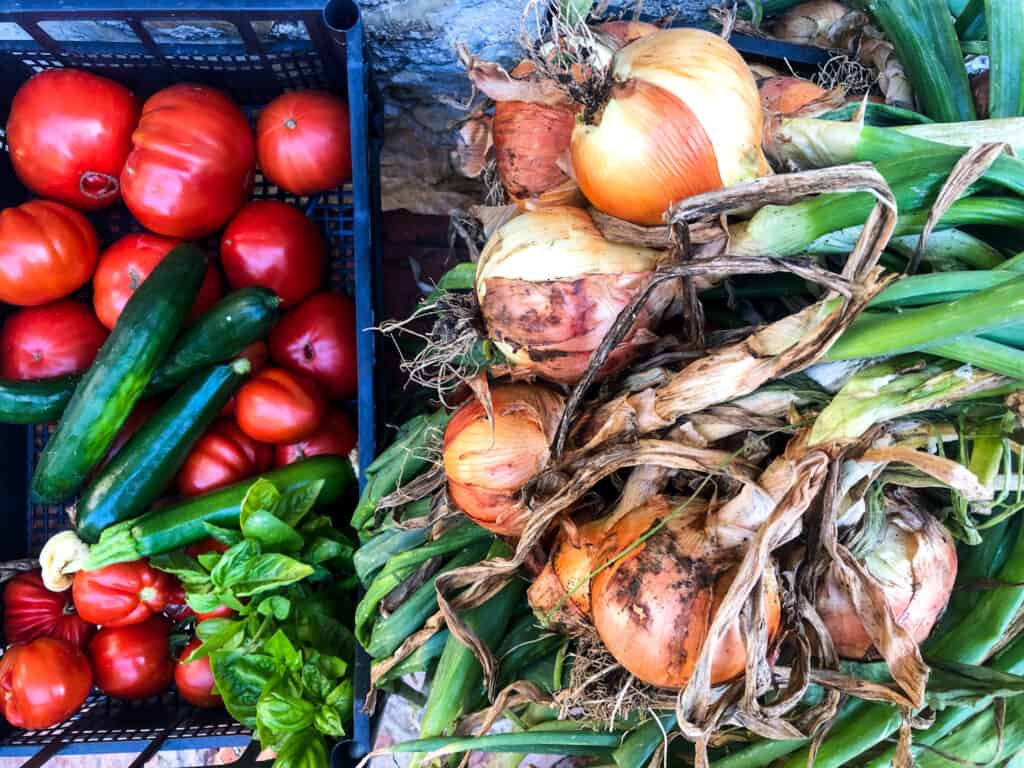
Cipolla di Certaldo: The onion of Certaldo, so tied to the town that it appears on its coat of arms.
Pomodoro canestrino di Lucca: A ribbed, basket-shaped tomato grown around Lucca.
Elsewhere in Italy you will find famous Presidia like culatello di Zibello and classic mortadella in Emilia-Romagna, alongside foods you have likely never heard of. That is the point.
Good To Know: A Presidium is not the same as a DOP or IGP. Some foods, like Mortadella di Prato, are both.
Osterie d’Italia and the Snail (Chiocciola)
If you only use one Slow Food tool in Italy, make it Osterie d’Italia, the annual guide published by Slow Food Editore and sold in bookshops and as an app. It reviews osterie, trattorie and other casual places serving regional food at fair prices, and the best of them receive a snail, la Chiocciola.
Good To Know: A snail sticker on a restaurant door usually means the place is listed in the guide, but check the current edition. Stickers can stay on the glass for years after a place has changed hands.
Earth Markets (Mercati della Terra)
Slow Food Earth Markets are farmers’ markets where the people behind the stall grew, raised or made what they sell. They are usually held on a set day each week or month, products must be local and seasonal, and the producers agree to Slow Food’s rules. They are among the best places to taste the real produce of an area, and they fit perfectly with my advice on how to shop at markets in Italy. For the bigger picture, see my guide to food markets in Italy.
Condotte: The Local Chapters
Slow Food in Italy runs through local chapters called condotte, each led by volunteers. They organize dinners, school projects, tastings and producer visits, and they are often behind the revival of a local food. In my corner of southern Tuscany, the Montepulciano-Chiusi chapter was among the groups that worked to save aglione, the giant, mild garlic of the Valdichiana that goes into pici all’aglione.
The University of Gastronomic Sciences
In 2004 Slow Food founded the University of Gastronomic Sciences (UNISG) in Pollenzo, just outside Bra, together with the regions of Piedmont and Emilia-Romagna. It studies food as a whole, from farming and science to history and culture, and it has trained a generation of food writers, producers and entrepreneurs.
Slow Food Events in Italy
Slow Food’s big events are the easiest way to see the whole network at once. Here are the main ones:
Terra Madre Salone del Gusto: Every two years in Turin. It grew out of Terra Madre, a world gathering of food communities first held in 2004. The 2026 edition, the 16th, ran from September 24 to 27 in the squares of the city center, with free general admission and paid tastings.
Cheese: Every two years in Bra, dedicated to raw milk cheese.
Slow Fish: Held in Genoa, Liguria, and focused on the sea, fishing and coastal communities.
Why Slow Food Matters
It Protects What Makes Italian Food Regional
Italian food is not one cuisine. It is hundreds of local ones, and each depends on specific beans, breeds, cheeses and breads. When a local variety disappears, so does the dish built on it. Slow Food’s work on biodiversity is really work on keeping Italian food regional, which is the reason the food Italy is famous for tastes so different from one valley to the next.
It Keeps Small Producers in Business
Many Presidia producers are small farms in mountain or rural areas where it is hard to make a living. Better prices and new buyers mean that young people can stay on the land, and that a cheese or a bean has a future rather than just a past.
It Changed How Italians Talk About Food
This was the focus of my thesis. Before Slow Food, Italians took their food culture for granted. The movement turned everyday things like a village bean, a raw milk pecorino or a family-run osteria into something to be proud of and to protect. Words like biodiversità, territorio and km zero are now part of normal Italian conversation, and Slow Food had a lot to do with that.
Is Slow Food Elitist?
Artisan food often costs more, and Slow Food events can feel aimed at food lovers with money to spend. The movement’s answer is the “fair” in its motto, and in practice much of what it promotes is not expensive at all: markets, seasonal vegetables and simple trattorie are often the cheapest way to eat well in Italy.
How to Eat Slow Food in Italy as a Traveler
You don’t need to join anything to eat the Slow Food way in Italy. These are the habits I recommend to everyone who visits:
Use the guide: Pick restaurants from the current Osterie d’Italia, especially in rural areas.
Eat seasonally: Order what’s in season. Here’s why Italians eat seasonally, and what that means on your plate.
Order the local dish: Skip the “tourist menu” and ask what the area is known for.
Look for Presidia: Menus and shop labels often name them. Order them when you see them.
Shop at markets: Buy picnic food from producers, not just from the supermarket.
Take your time: A proper meal has courses and isn’t rushed. My guide to Italian dinner courses explains how it works.
Ask questions: È di qui? (Is it from here?) is a perfectly normal thing to ask in Italy.
Slow Food in Southern Tuscany
Where I live, near Cetona, Slow Food values are simply how people eat. Hand-rolled pici with aglione, Pecorino di Pienza, new olive oil in November and wild game in winter are still everyday food, not museum pieces. Nearby Città della Pieve, just over the border in Umbria, is part of the Cittaslow network, and towns like Montepulciano are surrounded by small producers. For the dishes to look for, read what to eat in southern Tuscany and my favorite restaurants in southern Tuscany.
If you would like to cook this way with me, I run a Tuscany cooking retreat and private cooking classes at Camporsevoli near Cetona, built around local, seasonal ingredients and the producers around us.
Frequently Asked Questions
Is Slow Food the same as Cittaslow?
No. Cittaslow is a separate network of small towns, founded in 1999 after an idea from the mayor of Greve in Chianti, with the support of Petrini. It applies the Slow Food philosophy to how a town is run, from local food to quality of life, while Slow Food itself focuses on food.
What is the difference between a Slow Food Presidium and a DOP?
A DOP or IGP is a legal designation recognized by the European Union that protects a product’s name and origin. A Slow Food Presidium is not a legal label; it is a Slow Food project that supports a small group of producers of an endangered food. A product can be both, as with Mortadella di Prato IGP.
Is Slow Food the same as organic?
Not exactly. Slow Food cares about sustainable farming, but a Presidium or a Chiocciola restaurant does not have to be certified organic. Many small producers farm traditionally without paying for certification, so “Slow Food” and “organic” overlap but are not interchangeable.
Is Slow Food still active after Carlo Petrini’s death?
Yes. Edward Mukiibi has been president of Slow Food since 2022, and Barbara Nappini is president of Slow Food Italia. Terra Madre Salone del Gusto went ahead in Turin in September 2026, and the 2027 Osterie d’Italia guide was published in October 2026.
Can visitors join Slow Food?
Yes. Membership is open to anyone, in Italy or abroad, through Slow Food’s websites. You don’t need to be a member to shop at Earth Markets, eat at listed restaurants or visit most of Terra Madre.