If you have ever stood in a Tuscan enoteca holding a bottle of Vino Nobile in one hand and a Rosso di Montepulciano in the other, wondering what the difference is (and whether it is worth the extra euros), this Montepulciano wine guide is for you. Both wines come from the same hilltop town in southern Tuscany, both are built on Sangiovese, and both carry the Montepulciano name, yet they are made to be drunk in very different ways.
I’m Louisa and I have lived in southern Tuscany with my family since 2012, about half an hour from Montepulciano. Over the years I have toured and tasted at more Montepulciano wineries than I can count, from the eight historic cellars inside the town walls to family estates in the surroundings
In this guide, I explain exactly how Vino Nobile di Montepulciano and Rosso di Montepulciano differ, from the grapes and aging rules to taste, price and food pairings, plus the new Pieve category and where to taste both wines in Montepulciano.
Jump to Section
Quick Guide: Vino Nobile vs. Rosso di Montepulciano
| Vino Nobile di Montepulciano | Rosso di Montepulciano | |
|---|---|---|
| Classification | DOCG (Italy’s highest wine category) | DOC |
| Main Grape | Minimum 70% Sangiovese (Prugnolo Gentile) | Minimum 70% Sangiovese (Prugnolo Gentile) |
| Minimum Aging | 2 years (Riserva 3 years, Pieve 3 years) | Released from March 1 after the harvest |
| Wood Aging | Required: at least 12 months in wood | Not required |
| Minimum Alcohol | 12.5% (Riserva and Pieve 13%) | 11.5% |
| Style | Structured, savory, built to age | Fresh, fruity, easy-drinking |
| Best With | Grilled meats, game, aged pecorino | Pasta, pizza, cured meats, weeknight dinners |
What Is Montepulciano Wine?

Montepulciano wine refers to the wines made from vineyards around the town of Montepulciano, in the province of Siena. The production area covers the hillsides of the Montepulciano municipality, between roughly 250 and 600 meters above sea level, looking out over the Valdichiana on one side and toward the Val d’Orcia on the other. If you are visiting for the first time, start with my local’s guide to Montepulciano, Italy.
The local Consorzio oversees four wines under the Montepulciano name:
Vino Nobile di Montepulciano DOCG: the town’s flagship red, including the Riserva and the new Pieve wines
Rosso di Montepulciano DOC: the younger, everyday red
Vin Santo di Montepulciano DOC: the local dessert wine
Toscana IGT: not a Montepulciano denomination, but many local wineries also bottle IGT reds and whites
Prugnolo Gentile: Montepulciano’s Sangiovese
Both Vino Nobile and Rosso di Montepulciano are made mainly from Sangiovese, the same grape behind Chianti and Brunello. In Montepulciano, the local clone is traditionally called Prugnolo Gentile, and you will see the name on many labels and tasting menus. The remaining 30% can be other grapes authorized in Tuscany, which is why one producer’s Vino Nobile can taste quite different from another’s. Some stick to local varieties like Canaiolo and Colorino, while others add Merlot or Cabernet.
Montepulciano Wine vs. Montepulciano d’Abruzzo
This is the most common mix-up I hear from visitors. Montepulciano d’Abruzzo is a completely different wine, made from the Montepulciano grape in the region of Abruzzo on the Adriatic coast. The Tuscan wines in this guide are named after the town, not the grape, and contain no Montepulciano grapes at all. If you are curious about the Abruzzo version, I cover it in my guide to traditional food from Abruzzo.
Vino Nobile di Montepulciano DOCG

Vino Nobile di Montepulciano is the wine that put the town on the map. Its reputation goes back centuries: in 1685 the poet Francesco Redi famously crowned it the king of all wines in his poem Bacco in Toscana. It received DOC status in 1966 and DOCG status in 1980, and the Consorzio proudly calls it the first Italian wine to carry the DOCG label.
Grapes: Minimum 70% Sangiovese, up to 30% other Tuscan-authorized grapes
Aging: At least 2 years from January 1 after the harvest, with at least 12 months in wood
Minimum Alcohol: 12.5%
Tastes Like: Red cherry and plum, dried herbs, a touch of spice, firm tannins and lively acidity
Best For: A special dinner, a bottle to bring home, or one to cellar for a few years
Producers can choose how to split those two years. Some age the wine in wood for the full 24 months, while others use a minimum of 12 or 18 months in barrel and finish in steel, concrete or bottle.
That choice, along with the barrel size, shapes the style more than anything, so a Vino Nobile aged in large old Slavonian oak botti will taste quite different from one aged in small French barriques.
Vino Nobile di Montepulciano Riserva
A Riserva is made from the best grapes of the vintage and must age for at least 3 years, including at least 6 months in bottle, with a minimum alcohol of 13%.
Expect more depth, softer tannins and notes of leather, tobacco and dried fruit. It costs more than a standard Vino Nobile and is the bottle I would recommend for a bistecca dinner or a holiday table.
Vino Nobile Pieve: The Newest Montepulciano Wine
The biggest change to Montepulciano wine in decades arrived in 2025, when the first Vino Nobile di Montepulciano Pieve bottles (from the 2021 vintage) went on sale. The Pieve category divides the area into 12 historic subzones, each named after an old parish church or pieve, with boundaries drawn from land records dating back to 1765. The rules are the strictest in the denomination:
Grapes: Minimum 85% Sangiovese, with the rest only from local varieties (Canaiolo Nero, Ciliegiolo, Mammolo, Colorino). No international grapes.
Vineyards: At least 15 years old, all in a single subzone and farmed by the winery that bottles the wine
Aging: At least 3 years, including 12 months in wood and 12 months in bottle
Minimum Alcohol: 13%
The 12 Pieve subzones are Ascianello, Badia, Caggiole, Cerliana, Cervognano, Gracciano, Le Grazie, San Biagio, Sant’Albino, Sant’Ilario, Valardegna and Valiano.
Good To Know: A wine labeled Pieve cannot also be labeled Riserva. Think of the two as parallel top tiers: Riserva is about extra aging, while Pieve is about a specific place.
Rosso di Montepulciano DOC
Rosso di Montepulciano is the younger sibling. It comes from the same production area and follows the same grape rules as Vino Nobile (minimum 70% Sangiovese), but it can be released from March 1 of the year after the harvest and has no wood aging requirement. Many wineries use their younger vineyards or lighter batches for it, and a wine that qualifies as Vino Nobile can even be reclassified as Rosso within the first 16 months.
Grapes: Minimum 70% Sangiovese, up to 30% other Tuscan-authorized grapes
Aging: No minimum beyond the March 1 release date
Minimum Alcohol: 11.5%
Tastes Like: Fresh red berries and cherries, soft tannins, bright acidity
Best For: Weeknight dinners, lunch at a trattoria, picnics, and anyone who prefers a lighter red
As I mention in my guide to wines to try in Tuscany, Rosso di Montepulciano is less complex than Vino Nobile. It is the wine you will see most often on the shelves of Montepulciano’s shops and in the local supermarkets.
Vino Nobile vs. Rosso di Montepulciano: Key Differences

Aging and Oak
Vino Nobile must spend at least two years aging, with at least one year in wood, before release. Rosso di Montepulciano can be on the shelf about six months after the harvest and is often aged only in steel or concrete. The extra time in the barrel gives Vino Nobile its structure, spice and ability to age.
Taste and Body
Rosso di Montepulciano is bright, juicy and medium-bodied, meant to be enjoyed young. Vino Nobile is fuller and more savory. If you taste the two side by side at a winery (which I highly recommend), the difference is obvious within the first sip.
Price and When to Drink
Rosso di Montepulciano is the better-value bottle and is best drunk within a few years of the vintage. Vino Nobile costs more because of the longer aging and lower yields, and a good bottle will keep improving for years, especially a Riserva or Pieve.
Which Montepulciano Wine Should You Order?
Order Rosso di Montepulciano if: you want a glass with lunch, a pasta dish or pizza, or a wine to drink tonight
Order Vino Nobile if: you are having grilled meat or game, celebrating, or want to taste what Montepulciano is famous for
Order a Riserva or Pieve if: you want the most complex expression of Montepulciano Sangiovese, or a bottle to take home and cellar
Food Pairings for Vino Nobile and Rosso di Montepulciano
Both wines were made for southern Tuscan food, and the best pairings are the dishes served in the same hills where the grapes grow. Here is what I would pour with each:
Pici all’aglione or pici al ragù: Rosso di Montepulciano (try my pici pasta recipe with aglione sauce)
Pecorino di Pienza: Rosso with fresh pecorino, Vino Nobile with aged pecorino (see my guide to pecorino di Pienza)
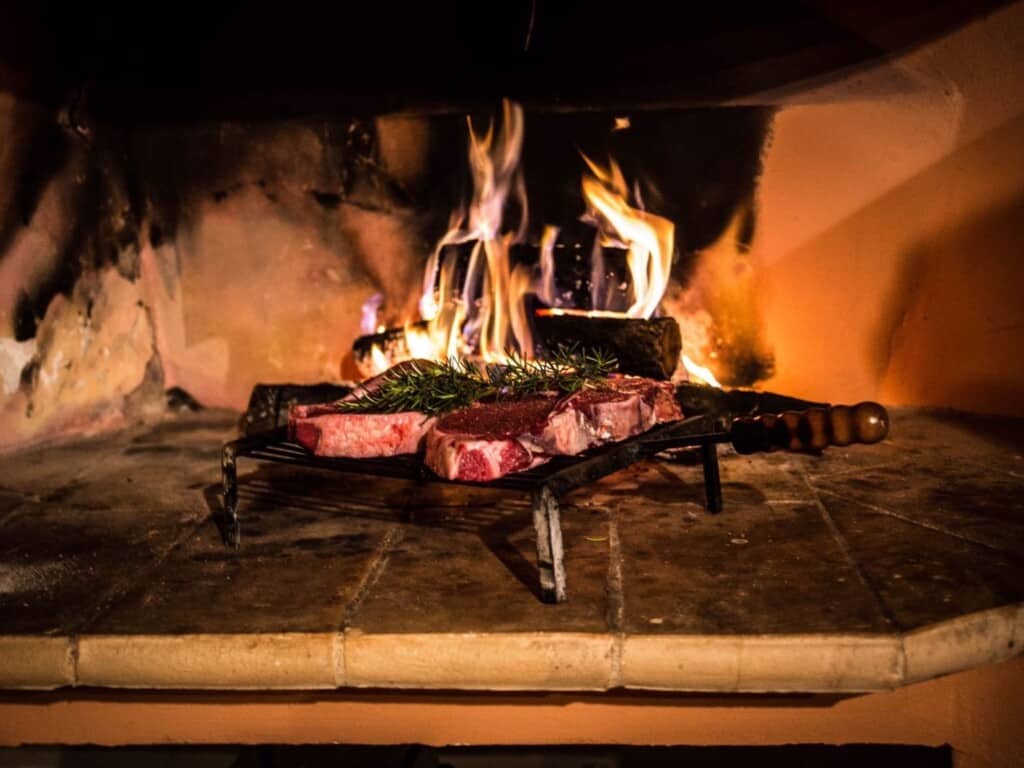
Bistecca fiorentina and tagliata of Chianina beef: Vino Nobile or Riserva (here is where to eat bistecca fiorentina in Florence)
Cinta Senese pork and wild boar: Vino Nobile
Salumi, crostini and pizza: Rosso di Montepulciano
For more dishes from the area, read what to eat in southern Tuscany and my overview of traditional Tuscan food.
Vin Santo di Montepulciano

Vin Santo is the amber dessert wine poured at the end of a Tuscan meal. Vin Santo di Montepulciano is made mainly from Malvasia Bianca, Grechetto and Trebbiano Toscano grapes that are dried before pressing, then aged for at least three years in small wooden barrels (caratelli). The rare Occhio di Pernice version is made mostly from Sangiovese and aged for at least six years. Serve it with homemade cantuccini, or bring a bottle home as one of the best food souvenirs from Tuscany.
Where to Taste Montepulciano Wine
In Town: The Historic Cellars
The easiest way to taste Vino Nobile and Rosso side by side is in the historic center, where the underground cellars carved beneath the palaces are open for tours and tastings. I explain how to visit each one in my guide to the eight historic Montepulciano wineries, and you can fit a tasting into my half-day itinerary for Montepulciano or the full one-day itinerary.
In the Countryside: Estate Wineries
For a vineyard visit, two of my favorite estates are Avignonesi, a biodynamic winery on the Cortona side of the denomination, and family-run Valdipiatta, about 4 km northeast of town. For more options, see my list of Montepulciano vineyards you should visit and my tips on wine tasting in Tuscany.
At the Table
Every restaurant in town has a list built around Vino Nobile and Rosso, and many pour both by the glass. Check my favorite Montepulciano restaurants before you go.
Good To Know: If you would like to pair Montepulciano wine with a hands-on cooking experience, our Tuscany cooking retreat at Camporsevoli, near Cetona, is just a short drive from Montepulciano’s wineries.
How to Read a Montepulciano Wine Label
Italian wine labels can look intimidating, but a Montepulciano label tells you most of what you need to know:
Vino Nobile di Montepulciano DOCG: at least 2 years of aging. Look for the numbered government seal on the neck.
Riserva: at least 3 years of aging
Pieve + subzone name (e.g. Pieve Cervognano): single-subzone wine, minimum 85% Sangiovese, at least 3 years of aging
Rosso di Montepulciano DOC: the young, everyday red
Vintage year: the year of the harvest. For Rosso, younger is usually better.
Good To Know: Some producers simply write “Nobile di Montepulciano” on the label. It is the same wine.
Frequently Asked Questions
Is Vino Nobile di Montepulciano sweet or dry?
Vino Nobile di Montepulciano is a dry red wine. Its fruit notes of cherry and plum can read as ripe, but there is no residual sweetness. If you want something sweet from Montepulciano, look for Vin Santo di Montepulciano.
Is Vino Nobile di Montepulciano the same as Brunello di Montalcino?
No. Both are Sangiovese-based Tuscan DOCG reds, but Brunello comes from Montalcino, must be 100% Sangiovese and ages longer before release. Vino Nobile allows up to 30% other grapes and is usually a little softer and more approachable younger. Read my comparison of Montepulciano vs. Montalcino if you are deciding which town to visit.
How long can you age Vino Nobile di Montepulciano?
A standard Vino Nobile from a good producer generally drinks well for 5 to 10 years after the vintage, while Riserva and Pieve wines can last longer. Rosso di Montepulciano is made to be enjoyed young, ideally within two or three years.
What temperature should Rosso di Montepulciano be served at?
Serve Rosso di Montepulciano slightly cool, around 16°C (60–62°F), which keeps its fruit fresh. Vino Nobile shows best a little warmer, around 18°C (64°F), and older bottles benefit from being opened an hour before dinner.
Can you buy Vino Nobile and Rosso di Montepulciano outside Italy?
Yes. Many Montepulciano wineries export, and well-known producers such as Avignonesi sell both wines in shops and restaurants abroad. Buying directly at the winery, however, gives you access to older vintages and small-production bottles you rarely find at home.
Final Thoughts on Montepulciano Wine
The simplest way to remember the difference between Vino Nobile and Rosso di Montepulciano: Rosso is for today, Nobile is for an occasion. After more than a decade living near Montepulciano, I still reach for a Rosso on a Tuesday night and save the Vino Nobile for Sunday lunch. If you are planning a visit, start with my list of things to do in Montepulciano, and if you are here in December, the Montepulciano Christmas market is a festive place to pick up a bottle. Salute!
More on Montepulciano Wine: Montepulciano Wineries | Montepulciano Vineyards You Should Visit | Avignonesi Winery | Valdipiatta Winery
Hungry for more? Montalcino Wineries | Montalcino, Italy | My 8 Favorite Restaurants in Southern Tuscany | Foods to Try in Siena
Eating in Italy Basics: Wines to Try in Tuscany | Italian Digestivo | Italian Cheese