If you’re traveling through northern Italy and spot a small, creamy cheese nestled in a deli case or served with a drizzle of honey —you may have discovered Robiola cheese, one of Italy’s softest and most decadent regional cheeses.
This northern Italian cheese is beloved for its:
- creamy texture
- tangy flavor
- versatility
It’s a staple in homes and restaurants across Piedmont, Lombardy, and Liguria, and one of the country’s hidden gems when it comes to soft cheeses.
Let’s take a closer look at:
- what Robiola is
- how to pronounce it
- how it’s made
- the many delicious ways it’s used in Italian cooking
Jump to Section
What Is Robiola Cheese?

Robiola is a soft-ripened Italian cheese that can be made from cow’s milk, goat’s milk, sheep’s milk—or a combination of the three.
Its origins date back to centuries and are most strongly tied to the Langhe region in Piedmont, though variations are also found in Lombardy and Liguria.
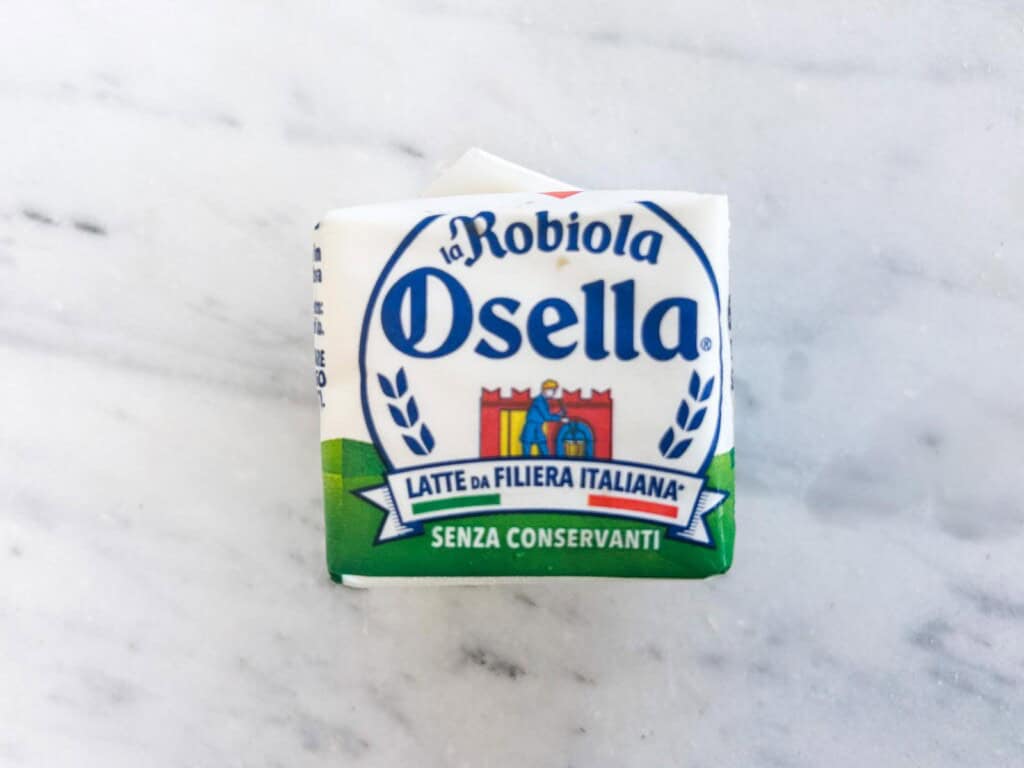
The cheese is usually sold in small rounds or squares, with a creamy, spreadable interior and a thin, edible rind (but not always).
Depending on the exact type and aging process, Robiola can range from mild and milky to tangy and slightly ripe tasting. I sometimes describe it as having a similar tang to cream cheese.
The most famous and widely available type is Robiola di Roccaverano DOP, made with raw goat’s milk and aged just long enough to take on the design of the cheese mold on the outside while staying rich and creamy within.
Good To Know: Unlike many Italian cheeses, Robiola is best enjoyed young and fresh. It’s often eaten within days of being made—making it a true farm-to-table cheese to sample while in northern Italy.
How To Pronounce Robiola in Italian
Robiola is pronounced roh-bee-OH-lah in Italian.
Listen to the Robiola pronunciation here:
Robiola Cheese Varieties
There’s no single type of Robiola cheese but rather, think of it as a category of fresh cheeses made in a variety of styles, depending on the milk used and the region of production.
- Robiola di Roccaverano DOP – This is the most prized version, made with goat’s milk in Piedmont. It’s soft, tangy, and slightly grassy tasting with a natural edible rind. It holds DOP status, meaning it must be made using traditional methods in a specific area around Roccaverano.
- Robiola Lombardia – Found in Lombardy, this version is often made with cow’s milk and has a milder, creamier flavor. It’s more widely available in supermarkets and is a favorite used in cooking.
- Robiola Tre Latti – Meaning “of three milks,” this style blends cow’s, goat’s, and sheep’s milk for a rich, balanced flavor. You may see it labeled as robiola mista in shops.
How Robiola Is Used in Italian Cooking
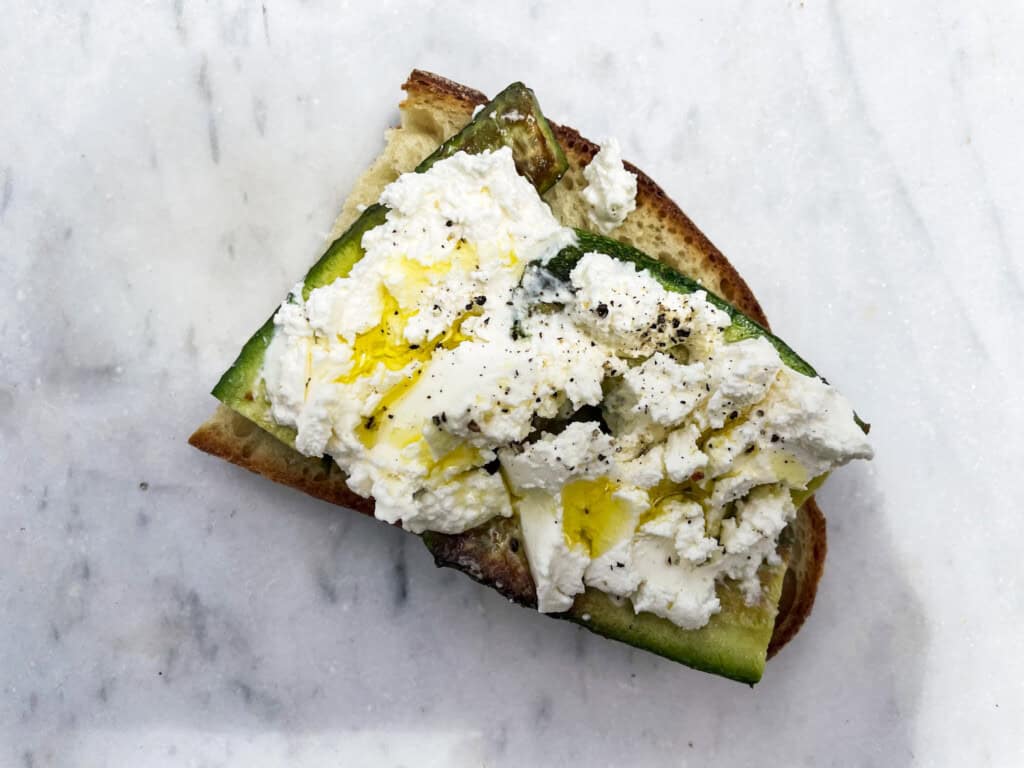
Robiola isn’t a cooking cheese in the traditional sense—it’s more often enjoyed fresh, simply served or used to accompany other Italian foods.
Look for Robiola in:
- Antipasti – served as an appetizer on a cheese board with honey, nuts and dried fruit with crusty bread. It might also be thinned with a little milk and used as a condiment for fresh seasonal vegetables
- Salads – dolloped over mixed greens or seasonal vegetables for a creamy counterpoint, similar to how goat cheese might be used in salads.
- Pasta sauces – Robiola is perfect for stirring into hot pasta dishes as it melts so beautifully
- Stuffed Italian pasta – used to fill ravioli or other Italian foods such as zucchini
- Sandwiches – this is my personal favorite way to use it. There is nothing like a salty, crunchy piece of focaccia smothered in Robiola and grilled vegetables
Cooking Tip: Serve Robiola at room temperature to bring out its full flavor and creaminess. It spreads like butter when softened!
How Robiola Is Made
Robiola cheese is made using a simple but time-sensitive process. Fresh milk (cow, goat, sheep, or a mix) is gently heated and coagulated with rennet.
The curds are drained and placed into molds, often without pressing, to retain the high moisture content.
After molding, the cheese is salted and allowed to rest for a few days to a week, depending on the style.
A soft, white rind forms naturally, and in the case of aged Robiola, light bloomy molds may develop (a light fuzz).
The result is a creamy, tangy cheese that melts on the tongue.
Robiola di Roccaverano DOP follows stricter production rules, using only raw goat’s milk and is aged for at least 4 to 10 days before sale. This version has a slightly drier center and a stronger aroma, prized by cheese connoisseurs.
Did You Know?: Robiola is one of the few Italian cheeses that can legally be sold in Italy using raw milk (latte crudo), especially in the DOP version from Roccaverano.
Tips When Purchasing Robiola Cheese
Because Robiola is so fresh and delicate, it’s best purchased from markets, cheese counters, or specialty food shops where turnover is high.
Look for:
- A clean, white rind (not slimy or heavily spotted)
- A soft, creamy center (slightly oozy at room temperature)
- Labels like Robiola di Roccaverano DOP or Robiola tre latti
Robiola is often sold in small rounds wrapped in paper or plastic and should be eaten within a few days of purchase. If you’re shopping in Piedmont, keep an eye out for robiola made by local farmers.
If you can’t find fresh Robiola, you can absolutely try the supermarket varieties to get an idea of what it’s like. It’s perfect for picnics and no-cook dinners with other pre-prepared foods.
Good To Know: You cannot bring Robiola home as a food souvenir or gift – fresh cheese is not permitted into most countries!
Check out all of my guides to Italian cheeses:
Italian Cheese – All You Need To Know Before Coming to Italy
Mozzarella Types and Shapes + a Mozzarella Imposter
What is Asiago?
What is Burrata?
What is Caprino?
What is Mozzarella di Bufala (Buffalo Mozzarella)?
What is Ricotta Salata?
What is Robiola?
What is Scamorza?
A Guide to Pecorino di Pienza
How to Pronounce Parmigiano
Is Mozzarella Pasteurized In Italy?
Is Ricotta Pasteurized In Italy?