Last updated on December 1st, 2025
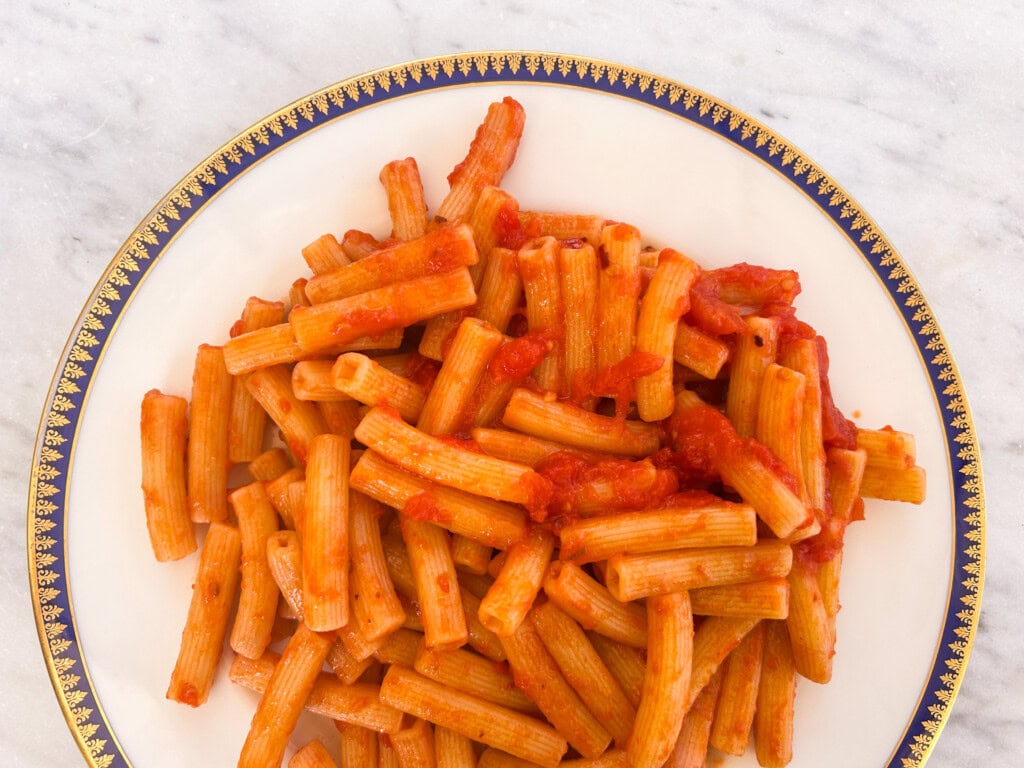
We all know and love Italy’s famous pomodoro sauce (tomato sauce). You know, that thick and hearty one that sticks to every strand of spaghetti? As good as it is, sometimes, it’s nice to switch it up.
May I introduce a good friend of Italy’s tomato sauce… arrabbiata sauce, an easy to make, fiery, vegan tomato sauce spiced up with either fresh chilis or dried chili flakes.
Today, I am sharing with you my Italian family’s recipe for this simple everyday arrabbiata pasta sauce. It’s ready in just 30 minutes, practically the time it takes to boil water and cook the pasta.
Jump to Section
How To Pronounce Arrabbiata Sauce
Arrabbiata is pronounced ahr-rahb-bee-ah-tah in Italian.
Listen to the pronunciation of arrabbiata here:
What Is Arrabbiata Sauce?

Meaning “angry,” arrabbiata sauce is a Roman pasta sauce made from chili peppers that are cooked with canned tomatoes, garlic and olive oil.
Ingredients For Arrabbiata Sauce
Olive Oil
You will need ¼ cup olive oil of any kind. We always use extra virgin in Italy but it doesn’t need to be.
Learn More:
15 Best Italian Olive Oils – To Enjoy in Italy & Bring Home
Best Italian Olive Oil Brands in America – Where to Buy Them and How to Store Them
Canned Tomatoes
Use One 28-ounce (800 grams) can whole peeled tomatoes, preferably San Marzano, which are the best quality. If you cannot find this, use any kind available to you.
Chili Peppers
For this recipe, you can choose to use either 1-2 teaspoons crushed red pepper flakes or 1 fresh cayenne chili pepper, chopped finely, including seeds. For me, 1 teaspoon is plenty but if you like really, really spicy food, use 2 teaspoons.
Other Ingredients
- 2 garlic cloves, peeled and crushed
- Pinch of sugar
- 1 teaspoon salt
How To Make Arrabbiata Sauce

Peel and crush the garlic with the back of a large kitchen knife.

In a heavy bottom skillet, heat the olive oil over medium low heat and add the peeled garlic and crushed red pepper flakes or chopped fresh chili.
If you like spice, add the whole 2 teaspoons of chili flakes. If you like a milder version, start with 1 teaspoon.
Cook, stirring frequently, until the garlic just starts to turn golden, for about 2 minutes, being careful it doesn’t brown or burn.

Add the salt, sugar, canned tomatoes and their juices to the pan, crushing the whole tomatoes with your hands or cutting with a pair of kitchen scissors as you add them.
Turn the heat up to medium, bring to a simmer and crush the tomatoes with the back of a wooden spoon to help them break down.

Reduce the heat to low and simmer for about 20 minutes, stirring occasionally, until the sauce thickens and the tomatoes have broken down.
Check for seasonally and adjust, if need be.
Remove the garlic cloves.
You can puree the arrabbiata sauce if you prefer a creamier version.
Serve with cooked pasta, preferably al dente or store in the refrigerator in an airtight container for up to 4 days.
Notes and Tips For Making Arrabbiata Sauce
- If at any point, the arrabbiata sauce starts sticking to the bottom of the pan, add a little bit of water to loosen up the sauce and stir well.
- Don’t cut out the pinch of sugar. When using canned tomatoes, it’s a small yet important step to help remove that bitter taste of the canned tomatoes.
- If the sauce seems too liquidy after the 20 minutes of cooking, continue to cook for an additional 5-10 minutes until thickened. You can also try raising the heat slightly to help the extra water evaporate.
- It’s important to fry the red pepper flakes in the olive oil before adding the canned tomatoes. If you decide you would like it spicier when you check for seasoning at the end, you can add more at this point but the spice won’t evenly be distributed throughout the arrabbiata sauce. Instead, you will have some spicier bites and other bites with less heat. Take note and adjust accordingly when you add the crushed red pepper flakes to the oil the next time you make this recipe.
- San Marzano whole peeled tomatoes are by far the best quality canned tomato for this spicy arrabbiata sauce. If you prefer, however, you can use any variety of canned tomato that is available to you.
Substitutions And Variations For Arrabbiata Sauce
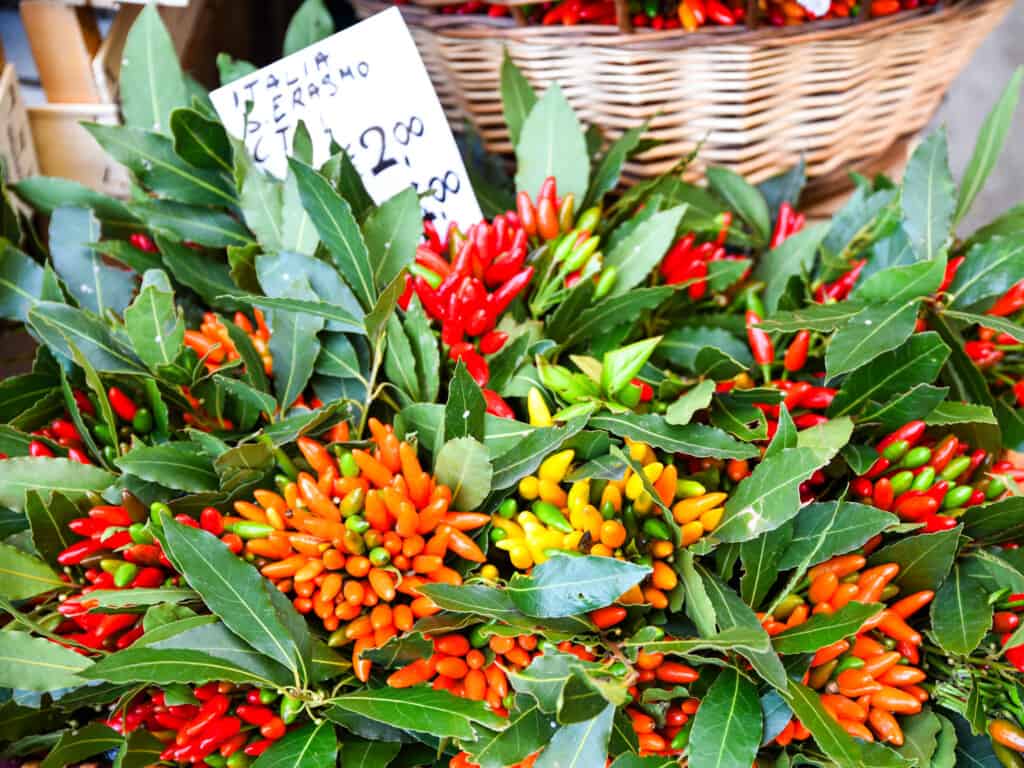
- If you prefer to use fresh chilies, substitute the dried red chili flakes with 1 fresh red cayenne pepper chilli, finely chopped, including seeds.
- Although not traditional in the original recipe, some people like to add a few torn basil leaves to the sauce right before serving to brighten up the flavor.
- I prefer my tomato sauces to be smooth, which you can achieve by pureeing with an immersion blender.
How To Serve Arrabbiata Sauce
Arrabbiata sauce is always served as a pasta sauce. Traditionally, Italians will make this easy arrabbiata sauce while the pasta cooks. The trick to getting this arrabbiata sauce to stick to your pasta is to finish cooking your pasta in the sauce.
Cook your pasta 2 minutes below the recommended al dente cooking time. Drain and add to a skillet over medium low heat with the arrabbiata sauce and cook for an additional two minutes, allowing the pasta to finish cooking in the actual sauce.
Pasta all’arrabbiata is typically served with grated Parmigiano Reggiano or Pecorino Romano cheese.
Choosing Pasta: Be sure to pick the best pasta brands, much of which you can find beyond Italy’s borders.
How To Use Arrabbiata Sauce

Here in Italy, we only use arrabbiata sauce as a pasta sauce. This is a sauce that cooks up in the time it takes to boil water and cook the pasta, making it a popular Italian pasta sauce for easy lunches or weeknight dinners.
It’s never used as a dipping sauce for bread, used on pizza, to make lasagne, or as a condiment for sandwiches. This being said, feel free to get creative with this arrabbiata sauce and incorporate it into your cooking how you might typically use a normal tomato sauce.
For meat lovers, you could even try cooking meatballs in this spicy arrabbiata sauce instead of a traditional tomato sauce. And don’t forget to mop up all of your sauce with a corner of bread, par Italian tradition.
How To Store Arrabbiata Sauce
You can make arrabbiata sauce ahead of time and keep it in an airtight container in the refrigerator for up to 4 days. Alternatively, it can be frozen for up to 3 months.
If you prefer to can your sauces, this one is perfect for doing so. Canning sauces does take more time and effort as you need to sterilize and process the cans correctly for food safety purposes.
Start by sterilizing large, glass jars and matching lids with warm soapy water and allow to air dry on a clean dish towel on the countertop.
Bring the arrabbiata sauce up to a boil. Distribute the sauce evening into the jars, being careful to clean any drips on the rim with a clean paper towel. Close the lid tightly and let rest until the jars have cooled and the lids have “popped”, guaranteeing a safely sealed sauce.
Tip: Arrabbiata sauce is so simple and freezes well, making it a great sauce to double up on and keep on hand in the freezer for busy weeknight meals.
Do you enjoy making and eating Italian pasta? If so, check out these recipes:
Orecchiette Pasta Recipe
Pici Pasta Recipe – How To Make Tuscany’s Hand Rolled Spaghetti
Tagliatelle Recipe + How to Pronounce It
Cacio e Pepe Recipe – Pronounce it and Make it Like an Italian (+ Audio)
Fresh Pomodoro Sauce Recipe – An Italian Summer Tradition
Pomodoro Sauce Recipe – Made With Canned Tomatoes
Creamy Kale Pasta Recipe
Italian Kale Pesto Recipe
Aglione Sauce Recipe
Arrabbiata Sauce Recipe
Pappardelle alla Boscaiola Recipe

Arrabbiata Sauce
Ingredients
- 1/4 cup olive oil
- 2 cloves garlic peeled and crushed
- 1-2 tsp crushed red pepper flakes or 1 fresh cayenne chili pepper, chopped finely, including seeds
- 1 28-oz can whole peeled tomatoes preferably San Marzano (800 g)
- 1 pinch sugar
- 1 tsp salt
Instructions
- Peel and crush the garlic with the back of a large kitchen knife.
- In a heavy bottom skillet, heat the olive oil over medium low heat and add the peeled garlic and crushed red pepper flakes or chopped fresh chili. If you like spice, add the chili flakes (1 teaspoon is plenty but if you like really, really spicy food, use 2 teaspoons). Cook, stirring frequently, until the garlic just starts to turn golden, for about 2 minutes, being careful it doesn’t brown or burn.
- Add the salt, sugar, canned tomatoes and their juices to the pan, crushing the whole tomatoes with your hands or cutting with a pair of kitchen scissors as you add them. Turn the heat up to medium, bring to a simmer and crush the tomatoes with the back of a wooden spoon to help them break down.
- Reduce the heat to low and simmer for about 20 minutes, stirring occasionally, until the sauce thickens and the tomatoes have broken down.
- Check for seasonally and adjust, if need be. Remove the garlic cloves. You can puree the arrabbiata sauce if you prefer a creamier version.
- Serve with cooked pasta, preferably al dente or store in the refrigerator in an airtight container for up to 4 days.
Notes
Notes and Tips
- If at any point, the arrabbiata sauce starts sticking to the bottom of the pan, add a little bit of water to loosen up the sauce and stir well.
- Don’t cut out the pinch of sugar. When using canned tomatoes, it’s a small yet important step to help remove that bitter taste of the canned tomatoes.
- If the sauce seems too liquidy after the 20 minutes of cooking, continue to cook for an additional 5-10 minutes until thickened. You can also try raising the heat slightly to help the extra water evaporate.
- It’s important to fry the red pepper flakes in the olive oil before adding the canned tomatoes. If you decide you would like it spicier when you check for seasoning at the end, you can add more at this point but the spice won’t evenly be distributed throughout the arrabbiata sauce. Instead, you will have some spicier bites and other bites with less heat. Take note and adjust accordingly when you add the crushed red pepper flakes to the oil the next time you make this recipe.
- San Marzano whole peeled tomatoes are by far the best quality canned tomato for this spicy arrabbiata sauce. If you prefer, however, you can use any variety of canned tomato that is available to you.
Substitutions And Variations
- If you prefer to use fresh chilies, substitute the dried red chili flakes with 1 fresh red cayenne pepper chilli, finely chopped, including seeds.
- Although not traditional in the original recipe, some people like to add a few torn basil leaves to the sauce right before serving to brighten up the flavor.
- I prefer my tomato sauces to be smooth, which you can achieve by pureeing with an immersion blender.